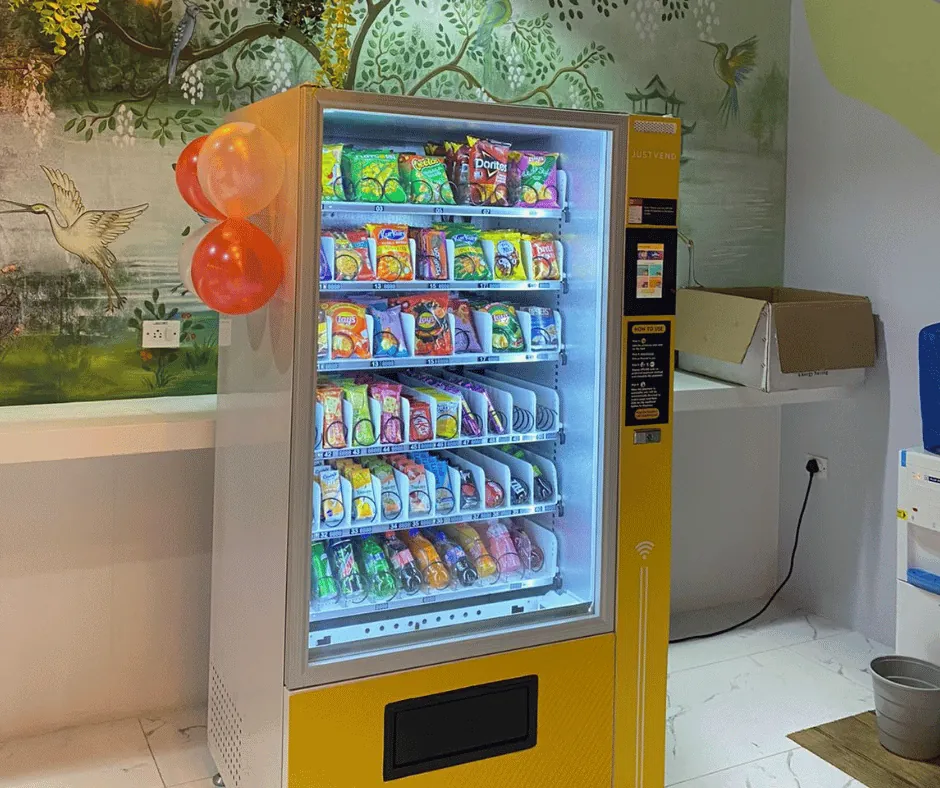
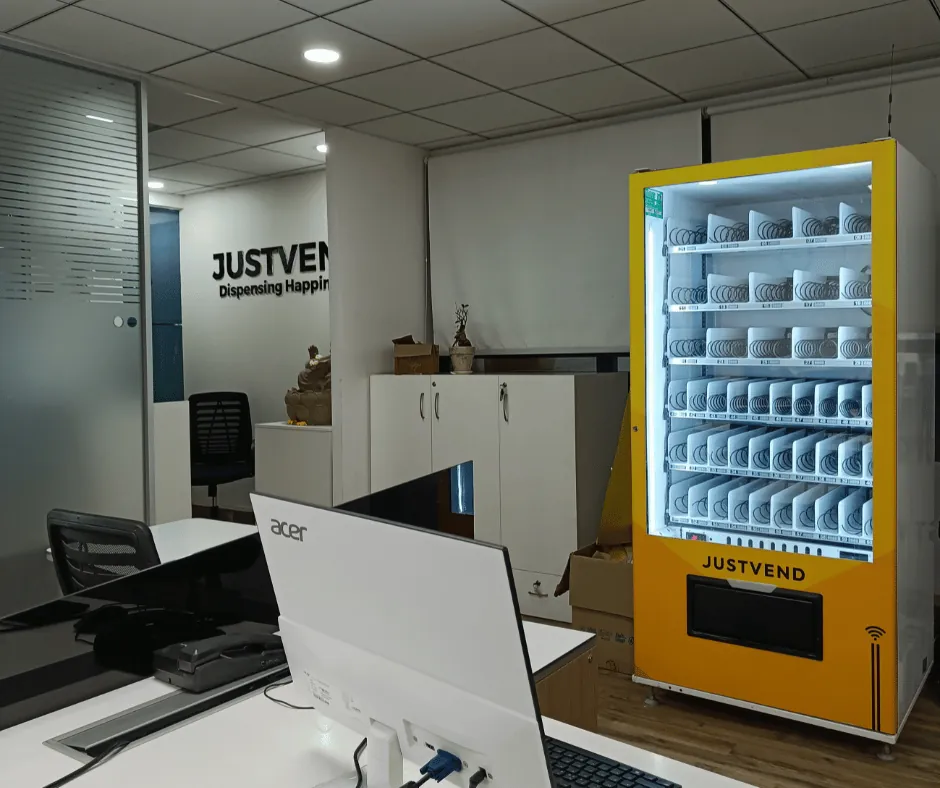
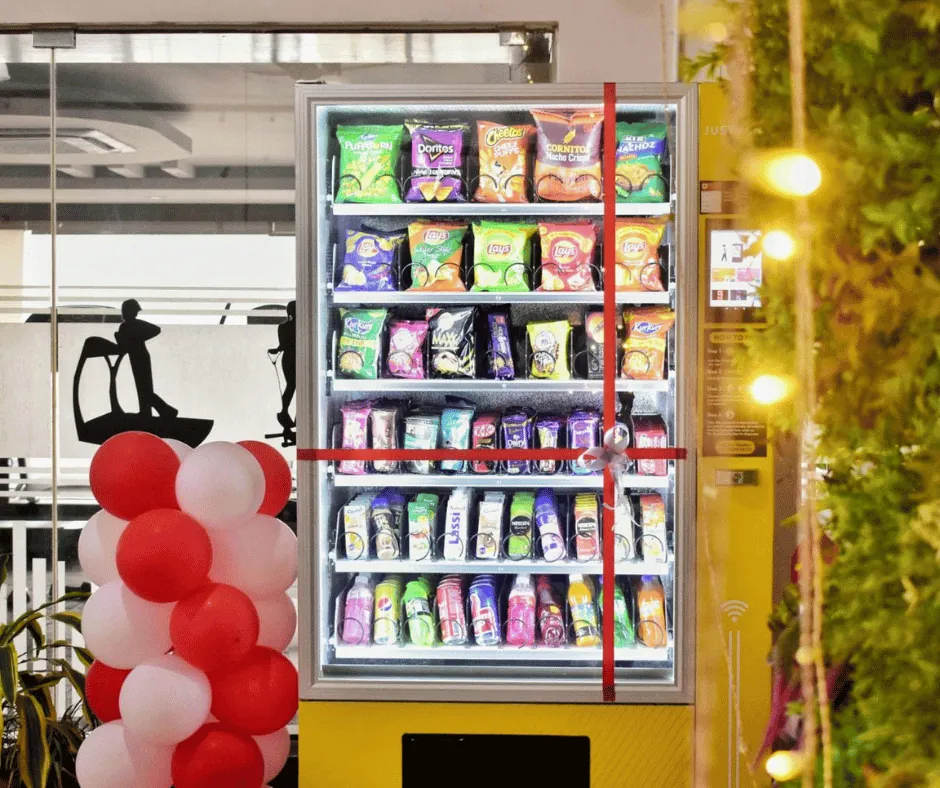
A smart vending machine is a self-service store that is connected to the internet, takes cashless payments and decides what to stock using data. In India, that usually means a machine you pay with UPI, that reports its stock levels in real time, and that gets refilled before it runs empty.
If your picture of a vending machine is a coin-operated box that eats your money and is half empty by evening, this guide explains what changed and why it matters for offices, campuses, hostels, hospitals and gated communities.
Smart vs. traditional vending: the short version
| Traditional vending machine | Smart vending machine |
|---|
| Payment | Coins or notes, often unreliable | UPI, wallets, cards and QR codes |
| Stock visibility | Someone has to walk up and check | Live, slot-by-slot inventory online |
| Refills | Fixed schedule, guesswork | Triggered by real-time data and demand forecasts |
| Product mix | Same for every location | Tuned to each location, season and time of day |
| Breakdowns | Found when a user complains | Flagged remotely, often before users notice |
The four parts of a smart vending machine
1. Connected hardware (IoT)
Sensors and a connected controller inside the machine report what was sold, what is left in each slot and whether everything is working. At JustVend, every store is connected 24/7 to a central dashboard, which is what makes real-time inventory tracking, remote diagnostics and predictive maintenance alerts possible.
2. Cashless payments
India moved to UPI faster than almost any country, and vending followed. A smart machine shows a QR code or connects to an app so people can pay with UPI, a wallet or a card. No coins, no change, no jammed note acceptors. We cover this in detail in how UPI vending machines work.
3. A user-facing screen and app
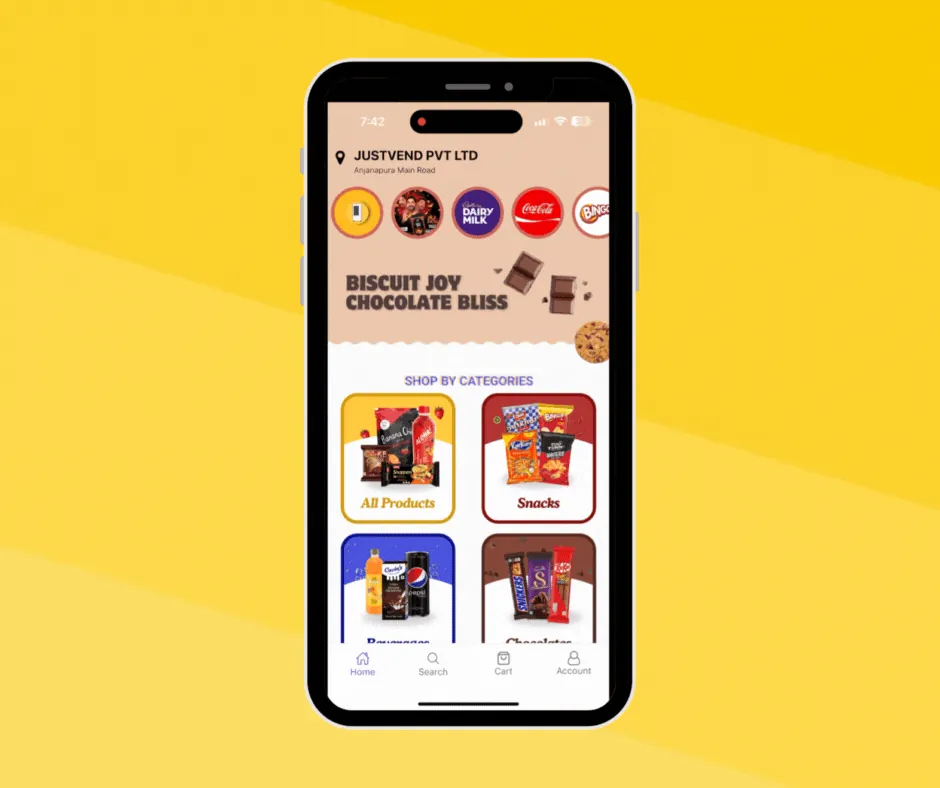
A touch screen on the machine and a companion app let people browse products, see what is in stock, and pay in a few taps. The JustVend app adds purchase history, personalised recommendations and real-time inventory updates, so you can check before you walk over.
4. AI that decides what to stock
This is the part most people don’t see. A machine has limited space (a JustVend machine holds 50 slots), while the warehouse behind it carries 2,000+ SKUs. Choosing which 50 products go into which machine is a forecasting problem. AI models look at sales by location, season and time of day to predict demand, and that prediction drives what gets loaded on the next refill. JustVend’s current prediction accuracy is 90%.
What “tap, pay, grab” looks like for a user
- Tap: open the app or scan the QR code on the machine.
- Pay: UPI, wallet or card.
- Grab: the product is dispensed instantly.
The whole thing takes seconds, which is the point: no queue at a canteen counter, no hunting for change.
Why it matters for the people who host the machine
- Fewer empty machines. Refills are driven by live stock levels and demand forecasts rather than a fixed calendar.
- Less waste. Stocking what actually sells at each location means less product expires on the shelf.
- Higher uptime. Remote monitoring catches faults early. JustVend works to a 99% uptime guarantee.
- Transparency. Sales and inventory are visible on a dashboard instead of being a black box.
Where smart vending machines work best
Anywhere people need essentials outside canteen hours or without leaving their building: college campuses and hostels, offices and corporate parks, hospitals and gated communities. JustVend runs machines across 150+ campuses and communities and serves 8 lakh+ users across India.
Frequently asked questions
Do smart vending machines need cash at all?
No. Smart vending in India is built around UPI and other cashless payments.
Who refills a smart vending machine?
The operator. With JustVend, our operations team restocks from local warehouses, guided by automated refill notifications from each machine.
Can a smart vending machine be monitored remotely?
Yes. That is the defining feature. Inventory, sales and machine health are tracked online around the clock.